Winslow Homer
1836 – 1910
From the Civil War front to the Maine surf - the art of Winslow Homer
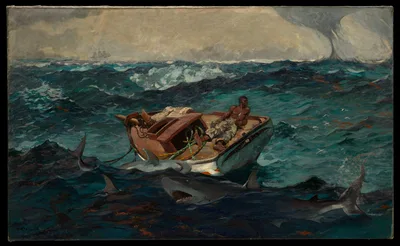 The Gulf Stream, 1899
Winslow Homer was born in Boston, Massachusetts, on February 24, 1836, the second of three sons of Charles Savage Homer, a businessman given to restless ventures, and Henrietta Maria Benson Homer, an accomplished amateur watercolourist who became his first teacher. Watercolour, the medium his mother practised at home, would decades later become the vehicle for some of his most original work.
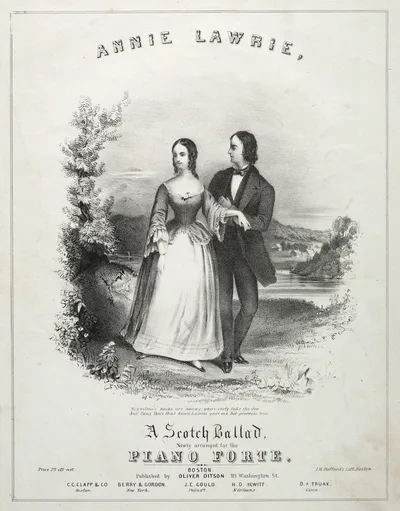
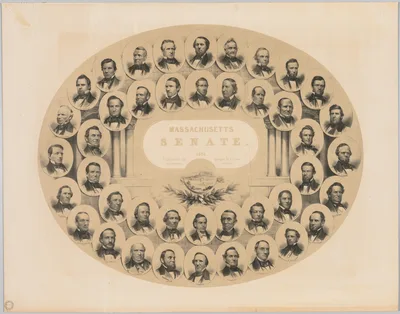
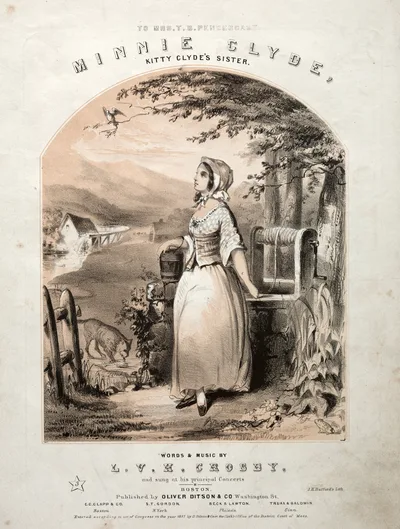
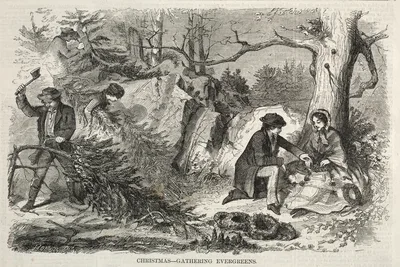
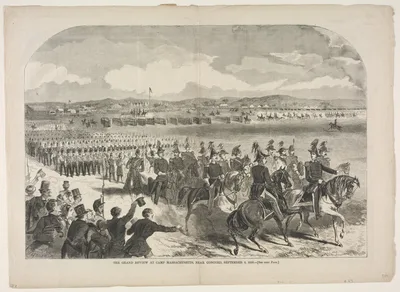
At nineteen Homer was apprenticed to the Boston commercial lithographer J. H. Bufford, a period of routine work he later recalled without affection. By 1857 he had set out as a freelance illustrator, supplying drawings to Ballou's Pictorial and to Harper's Weekly. Harper's offered him a staff position, but he turned it down to keep his independence, and in 1859 he moved to New York, where he attended classes at the National Academy of Design and studied briefly with the painter Frederick Rondel.
The Civil War made his name. Harper's Weekly sent him to the front as an artist-correspondent, and his first war sketches were drawn in George B. McClellan's camp on the Potomac in October 1861. Rather than battle panoramas, Homer drew the long stretches of camp life between engagements: soldiers foraging, writing home, playing cards and waiting. He turned the same material into oil paintings, and Prisoners from the Front (1866), showing Confederate captives confronting the Union general Francis Channing Barlow, won him wide acclaim. The National Academy of Design elected him a full Academician in 1865.
Late in 1866 Homer sailed for France and spent about a year there; Prisoners from the Front hung in the American section of the 1867 Exposition Universelle in Paris. Back in New York he continued to illustrate for Harper's Weekly, Appleton's Journal, Every Saturday and other periodicals, now favouring scenes of seaside resorts, skating ponds, harvest fields and country schoolrooms. Paintings such as Snap the Whip (1872) captured a rural, post-war America that many of his urban viewers already felt slipping away.
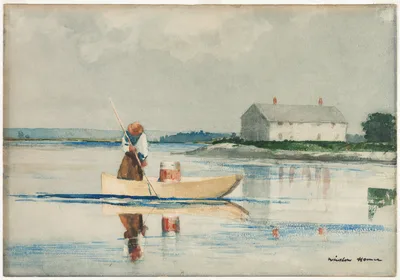
In the summer of 1873, at Gloucester, Massachusetts, Homer began painting in watercolour on a regular basis, and the success of these sheets allowed him to give up commercial illustration in 1875. He spent a productive season in 1878 at Houghton Farm as the guest of the industrialist Lawson Valentine.
In 1881 he crossed the Atlantic again and settled in Cullercoats, a fishing village near Tynemouth on England's North Sea coast, remaining until November 1882. The fisherwomen of Cullercoats, waiting on the shore, mending nets and hauling baskets, gave his art a new gravity, and when he returned he exhibited his English watercolours in New York.
In 1883 Homer moved to Prouts Neck, on the coast of Scarborough, Maine, where he lived and worked in a converted carriage house on his family's property overlooking the ocean. There he produced the great seascapes of his maturity - Eight Bells (1886), Cannon Rock and Northeaster (both 1895) - in which human figures recede before rock, surf and weather. He continued to travel: summer fishing trips took him to the North Woods Club near Minerva in the Adirondacks and to Quebec, while winter journeys brought him to Florida, Cuba, the Bahamas and later Bermuda. Those southern trips inspired luminous watercolours and the painting The Gulf Stream (1899), which the Metropolitan Museum of Art acquired in 1906.
Homer died in his Prouts Neck studio on September 29, 1910, at the age of seventy-four, and was buried at Mount Auburn Cemetery in Cambridge, Massachusetts.
A Career in Images
"From the time I took my nose off that lithographic stone, I have had no master, and never shall have any."
— Winslow Homer